Joint loss
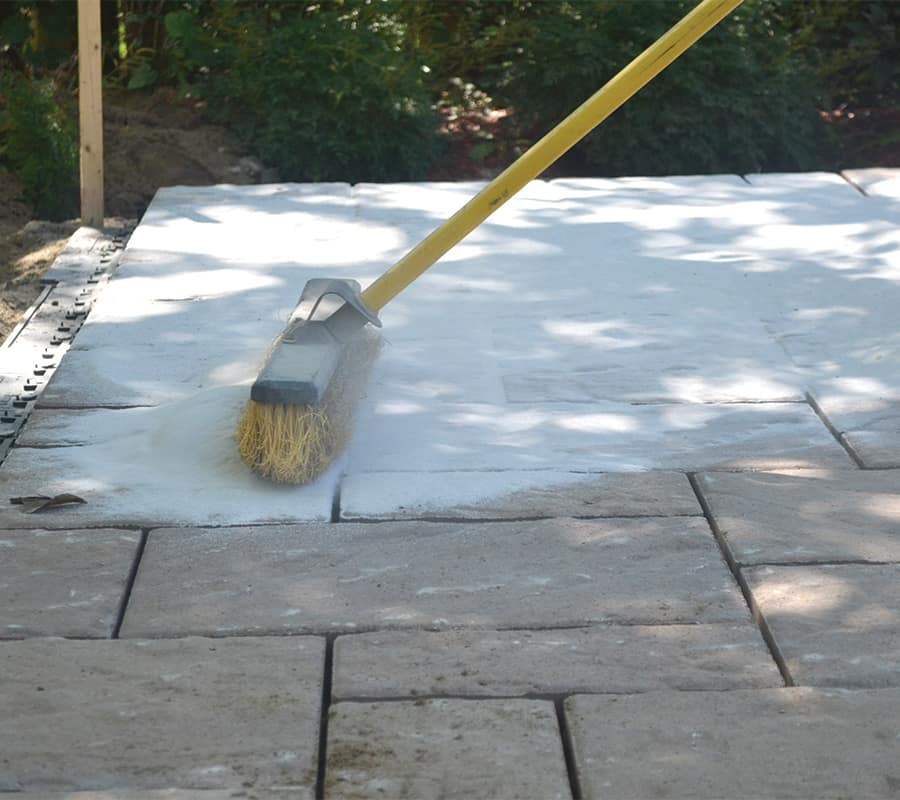
Sand is shallow, cracked or missing after weather and cleaning.

Prevent avoidable damage
Routine inspection and focused maintenance help protect joints, drainage, edge support and the paver surface through Ottawa seasons.
Seasonal care
Freeze-and-thaw cycles, runoff, cleaning, weeds and animals can change an interlock installation gradually.
Checking the surface after winter and before protection work makes it easier to address a loose edge, empty joint or small low spot before it affects a larger area.
Ask about your repairWhat to look for
A visible change in the surface can point to a problem with support, restraint or drainage beneath it.
Sand is shallow, cracked or missing after weather and cleaning.
A small area begins holding dirt or water after the thaw.
Perimeter pavers spread before the centre of the surface changes.
Moss, weeds, stains or debris make routine use and cleaning harder.
The repair process
Every repair begins with the condition beneath the surface—not with a coating or cosmetic shortcut.
Review levelness, edges, joints, drainage and visible paver damage.
Repair movement and drainage before cleaning, joint renewal or sealing.
Clean, replace damaged units, renew joints or stabilize minor problem areas.
Monitor vulnerable transitions after winter, heavy rain and nearby construction.
Maintenance in the right order
A stable surface is the foundation for joint repair, cleaning and sealing. Cosmetic work should follow structural and drainage corrections.
Common questions
Send photos and a short description if you are unsure which repair applies.
A visual check after winter and during heavy-rain periods can reveal early movement, joint loss and drainage issues.
Not automatically. The joints should be inspected for depth, cracking and failure, then renewed properly when needed.
Burrowing near edges or beneath unsupported areas can contribute to material loss and settlement. The access point and support should be corrected.
No. Sealing is optional and depends on the paver, condition and desired finish. Structural stability and healthy joints come first.
Keep the pavers. Fix the problem.